
Random Number Generator Without Repeats: Complete Guide
July 17, 2026 · iGotRandom
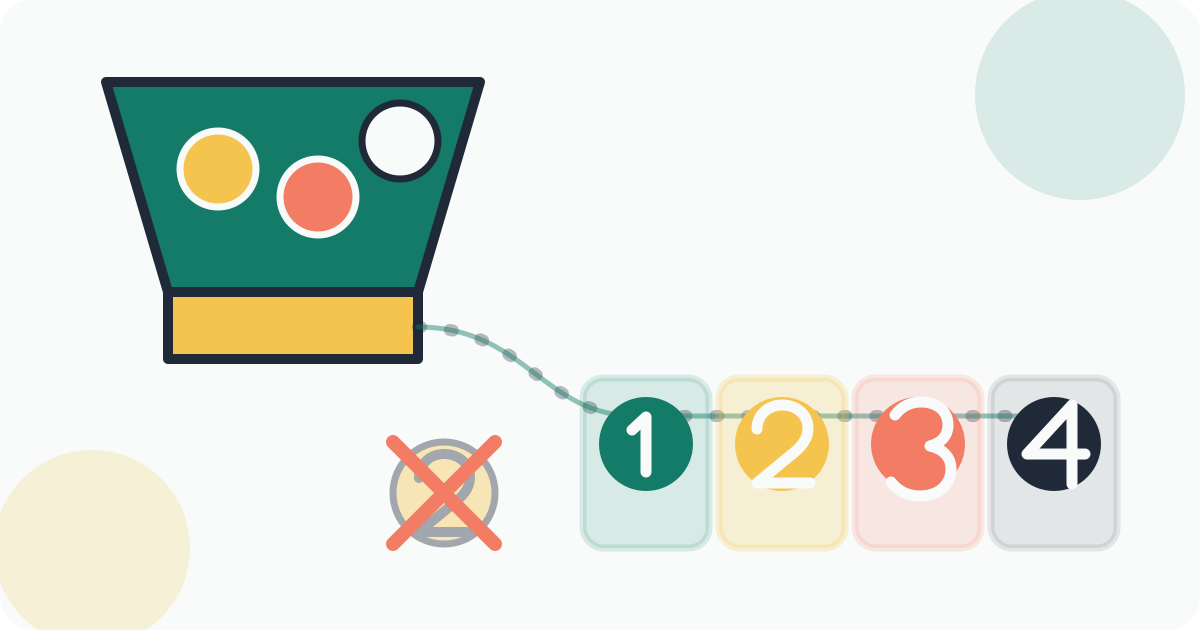
When every result must belong to a different person, prize, or seat, use a random number generator without repeats. Open the random number generator, enter the minimum, maximum, and count, then turn on the no-repeat option.
Quick answer
- A no-repeat draw is sampling without replacement: a selected number leaves the available pool for that result set.
- The range contains
N = max - min + 1possible numbers. - The requested count cannot be greater than
N. - Sorting changes only how the results are displayed, not which numbers were selected.
- Publish exclusions and redraw rules before the first draw.
What does “without repeats” mean?
Once a number is selected, it cannot appear again in the same result set. If
three numbers from 1 through 10 are 2, 7, 9, each appears exactly once.
Sampling without replacement prevents a number from being selected again during the draw; it is not the same as drawing with duplicates and deleting repeats afterward. Deleting repeats after a draw can leave fewer results than requested and changes the procedure. With-replacement sampling, such as repeated die rolls, returns each number to the pool so repeats remain possible. Neither mode is inherently fairer; the correct mode depends on the task.
Calculate the largest possible count
Both endpoints are included, so calculate the range size with:
N = max - min + 1
The site’s maximum unique count is min(N, 100). Even when a range contains
more than 100 values, one result set can contain at most 100 numbers on this site.
From 5 through 12, N = 12 - 5 + 1 = 8. From 0 through 9, N = 10;
zero is a candidate, so the range does not contain only nine numbers.
If the requested count is greater than N, the draw is impossible. Increase the range, reduce the count, or allow repeats. A no-repeat generator should reject the invalid request rather than silently return too few results.
Set up a no-repeat draw
- Open the random number generator.
- Enter the first candidate number as the minimum and the last as the maximum.
- Enter the number of results you need and select the no-repeat option.
- Turn on sorting only if selection order is unimportant, then generate.
For example, to pick 5 presenters from 30 numbered participants, use minimum 1, maximum 30, and count 5. No participant can be selected twice in that result set.
Does sorting change the probability?
No. Sorting may display 18, 3, 11 as 3, 11, 18, but it does not redraw the
numbers or change their probabilities. Sort raffle numbers for easy comparison.
Leave sorting off when the original order assigns presentation turns, team-pick
priority, or seats in sequence.
When should repeats be allowed?
Allow repeats when every trial must be independent and every number must return to the candidate pool. Common cases include simulating ten die rolls, allowing a number to win again in a later round, or resetting the entire pool for each event.
To prevent the same person from being selected across many rounds, use the name picker and remove each selected name before the next spin. This keeps the remaining candidates visible between separate draws.
Rules for a fair draw
Random values alone do not make the full process fair. Apply the same candidate range and operating rules to everyone.
Publish excluded numbers first
Remove vacant seats, unused ticket numbers, and absent participants before the draw. If there are many gaps inside the range, create a list of the valid numbers and use the list shuffler. Do not draw from an invalid range and then discard inconvenient results informally.
Agree on redraw conditions
Define valid reasons for a redraw—such as a confirmed input error—before the first result. Repeating the draw until a preferred number appears defeats the random procedure. Keep the settings visible so participants can verify them.
Freeze the number-to-person mapping
Finalize ticket, team-member, or seat assignments before drawing. Reassigning numbers afterward can make an unbiased random result produce an unfair outcome.
How the numbers are generated
iGotRandom uses the browser’s crypto.getRandomValues. In no-repeat mode, a
virtual partial Fisher–Yates selection maps only the positions needed for the
requested count. The tool does not allocate or shuffle the entire range. Every
eligible number in the same range still has an equal chance to be chosen.
The input and result are processed in the browser, with no account required.
Example settings
| Use case | Minimum | Maximum | Count | No repeats | Sort |
|---|---|---|---|---|---|
| Pick 5 raffle finalists from 30 tickets | 1 | 30 | 5 | On | On |
| Choose 6 members for a team from 45 people | 1 | 45 | 6 | On | Off |
| Assign the order of 20 seats | 1 | 20 | 20 | On | Off |
| Simulate 10 die rolls | 1 | 6 | 10 | Off | Off |
The last row is valid only because repeats are allowed: it performs ten independent selections from 1 through 6.
Generate unique random numbers now
Choose a valid range and count, publish exclusions and redraw rules, and decide whether result order matters. The unique count is capped at the smaller of the range size and 100. Then open the random number generator and generate the numbers without repeats. If you need to draw names or items directly, use the name picker instead.